You don’t need to replace a perfectly good solar system just because you want battery storage. But you also shouldn’t assume that an older system is ready for a battery simply because the panels are still producing power.
For a Perth homeowner, the useful question is what happens between the solar panels, inverter, switchboard and new battery once they are connected together. That matters more than the battery brand on the brochure, and it is the first thing we look at before quoting any solar battery installation in Perth.
A system installed during Perth’s earlier solar boom might have good panels but an ageing inverter. Another home might have a relatively new inverter but a switchboard that needs attention. A third may be better suited to an AC-coupled retrofit than replacing the existing solar inverter.
There is also a financial reason to investigate it now. Synergy’s A1 residential tariff is currently 33.2621 cents per kWh, while eligible exports under the Distributed Energy Buyback Scheme receive 2 cents per kWh outside the 3pm–9pm window and 10 cents during it.
So before buying anything, find out what your existing system can do, what it cannot do, and which parts are worth keeping.
Yes, in most cases you can add a battery to an existing solar system in Perth. The WA Government confirms that installing a battery on an existing solar system is possible, but notes it may require additional technology or a reconfiguration of the system.
That second half of the sentence is where the cost sits. The rest of this article is about working out which reconfiguration your house actually needs.
You don’t need to understand solar engineering to do this. Walk outside and photograph the equipment.
Take a clear photo of:
Then find your latest electricity bill. If possible, also find the original solar paperwork.
That’s enough to give an installer a much better starting point than saying:
“I’ve got a 5 kW solar system and want a 10 kWh battery.”
The 5 kW figure tells you about one part of the installation. It doesn’t tell you which inverter is installed, how the panels are arranged, whether the home is single or three phase, what the switchboard looks like, or whether the existing equipment can be integrated with the proposed storage.
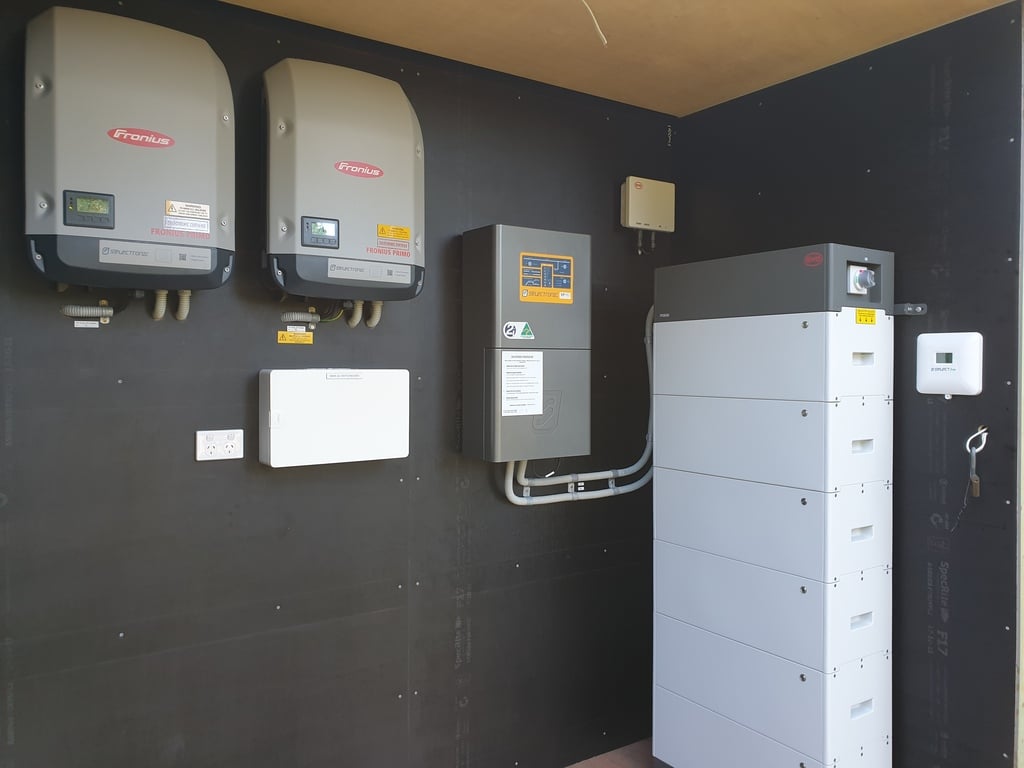
The inverter label is usually the quickest clue. Write down the manufacturer, model number and approximate installation year.
Don’t worry if you don’t know whether it is a string, hybrid or microinverter system, our guide to microinverters vs string inverters covers the difference if you’re curious, but the model number alone gives the installer something concrete to work from.
If the inverter was installed around 2011–2014 and has never been replaced, mention that too. An older inverter isn’t automatically faulty or unsuitable. It simply deserves more attention before another major piece of equipment is connected to it.
If the existing solar inverter is healthy and the proposed storage can work alongside it, there may be no reason to throw it away.
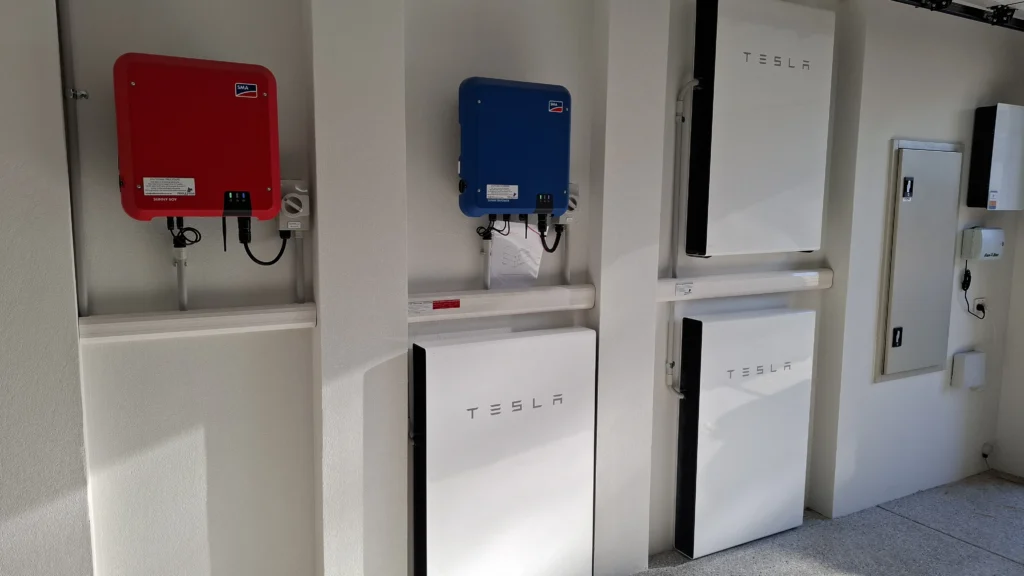
This is one of the main attractions of an AC-coupled battery retrofit. The solar inverter continues doing its existing job while the battery has its own inverter and control equipment.
That can be particularly relevant when the panels are still performing well but the homeowner wants to add storage without rebuilding the solar panel side of the system.
A DC-coupled battery system can use a hybrid inverter to manage solar generation and battery storage within the same system architecture.
This can be worth considering if the existing inverter is already ageing or isn’t suitable for the proposed storage arrangement. You can read more about the equipment involved on our solar inverters page.
But don’t replace an inverter merely because the word “hybrid” appears on a quote. The question is whether replacing it improves the overall installation enough to justify the additional cost.
Some battery products have their own integrated inverter.
Tesla Powerwall 3 is a well-known example. Its architecture can make it relevant when a homeowner wants to retain an existing solar installation rather than automatically replacing the original solar inverter, see our breakdown of Tesla Powerwall 3 pricing in Perth for what that costs locally.
Other manufacturers, including Enphase, Sonnen, Redback and Fronius, have different equipment combinations and compatibility requirements.
The brand name alone doesn’t determine whether a retrofit works. The exact model, existing inverter and proposed configuration do.
This is the option people sometimes overlook.
If the inverter is old, the switchboard needs work, the panels have performance problems and several components are approaching the end of their useful life, adding a battery may not be the cleanest answer.
You may be better off comparing the cost of a battery retrofit, against an inverter replacement, against a new solar-and-battery system.
The cheapest battery quote isn’t necessarily the cheapest long-term system.
This is where a retrofit becomes more than an equipment decision.
Suppose your solar system produces surplus electricity while the house is empty.
If 10 kWh is exported during a period when the DEBS rate is 2 cents per kWh, that export is worth about 20 cents.
If stored energy later replaces 10 kWh that would otherwise be purchased at the current A1 rate of 33.2621 cents per kWh, the avoided electricity purchase would be approximately $3.33.
That’s a difference of roughly $3.13 in this simplified example.
It isn’t a promised daily saving. Battery losses, household consumption, available solar generation, tariffs, battery degradation and export conditions all change the actual result. Our page on solar panel savings in Perth works through the variables in more detail.
But the calculation explains why an existing solar owner may start looking at storage.
The useful question is: how much of your solar are you exporting during the day, and how much electricity are you buying after the sun has gone down?
If your solar is already being used almost entirely while you’re at home, a battery may have less work to do.
If you’re exporting heavily during the day and then running air conditioning, cooking, hot water, pool equipment or other loads in the evening, the situation is different.
Don’t start with “what size battery should I buy?”
Start with “when does my house use electricity?”
Look at several bills rather than one unusually high or low month. Perth’s seasonal pattern matters, summer air conditioning produces a very different evening load from a mild spring day.
An EV changes the calculation again. So can:
Your existing solar system was designed around the household you had when it was installed. Your battery should be considered around the household you have now.
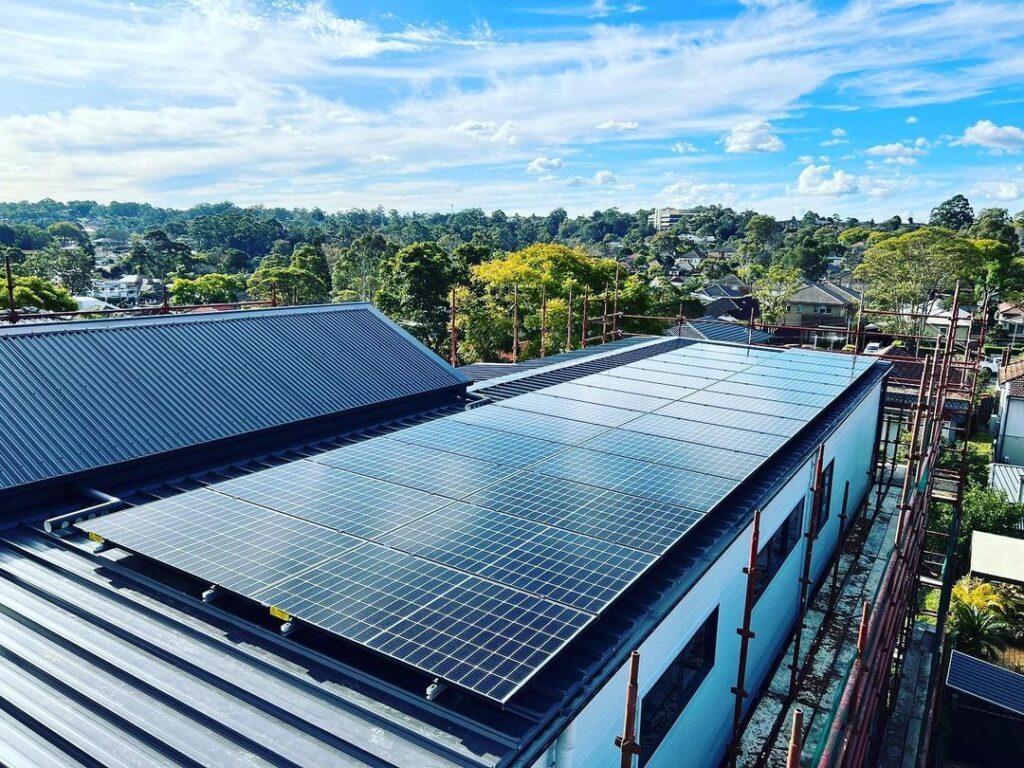
Don’t replace panels simply because they’re old. Check their actual performance.
A proper assessment should look at generation history, physical condition, shading, panel configuration, roof condition, previous faults and inverter performance. If you’re unsure what a realistic service life looks like locally, our guide on how long solar panels last in Perth is a reasonable benchmark.
A panel installed 12 years ago may still be useful.
On the other hand, if the panels are underperforming and the inverter is also ageing, spending heavily on a battery before investigating those problems puts the cart before the horse. A solar panel repair or a proper service and maintenance visit is often the cheaper first step.
The question is not “are my panels old?” It’s “are the panels producing enough useful energy to justify building the next stage of the system around them?”
Homeowners often focus on the inverter because that’s the equipment they recognise. The switchboard can be just as important.
An older Perth property may have limited space, older protection equipment or an electrical arrangement that needs upgrading before new equipment is installed.
That doesn’t mean every old switchboard needs replacing. It means the switchboard should be checked before the final design and price are agreed.
If a quote contains a switchboard upgrade, ask the installer to identify:
That turns an unexplained extra into something you can actually compare.
This is one area where old advice causes confusion.
WA’s updated technical requirements came into effect on 1 May 2026 for new and upgraded systems on the South West Interconnected System. Under Energy Policy WA’s published requirements, households on a standard connection can now install inverters up to an aggregate of 30 kVA, and all new and upgraded systems must be able to be remotely disconnected and reconnected by the electricity retailer, or otherwise be export limited to 1.5 kW.
Your existing solar system doesn’t automatically need to be rebuilt because these rules changed. But an upgrade is different from leaving the old system untouched.
Adding a battery, changing an inverter or modifying the electrical configuration means the proposed work is assessed under the requirements that apply to the upgraded system.
There is a useful detail here for owners of older equipment. The WA Government has confirmed that where an inverter can’t communicate and can’t be updated by firmware, installers can use gateways to meet the site requirements, and that gateways are available covering most of the existing inverter market.
In other words, an older inverter doesn’t automatically disqualify you. It does mean the communications question has to be answered as part of the design rather than after installation.
For the full regulatory detail, see our dedicated guide to Perth solar and battery rules.
Think of the retrofit as a chain:
Solar panels → existing inverter → switchboard → battery architecture → communications → network connection
A problem anywhere along that chain can change the recommended solution.
Good panels, a healthy string inverter and a suitable AC-coupled battery may lead to a very different proposal from good panels, a 12-year-old inverter, an ageing switchboard and a desire for blackout backup.
Both homeowners might say: “I already have solar. I just want a battery.”
Technically, they’re asking two very different questions.
The WA Residential Battery Scheme currently provides eligible Synergy customers with up to $1,300, calculated at $130 per usable kWh up to the scheme’s 10 kWh cap. Eligible Horizon Power customers can receive up to $3,800, calculated at $380 per usable kWh up to the same cap. No-interest loans of up to $10,000 are also available to eligible households, alongside our own finance options.
Two eligibility conditions matter particularly for retrofits. The battery must be on the Clean Energy Council approved product list, and the household must participate in a virtual power plant , which brings the communications question back into play.
The federal Cheaper Home Batteries Program also uses a capacity-based STC calculation, administered by the Clean Energy Regulator, with tiered treatment applying from 1 May 2026 and reduced rates for capacity above the first 14 kWh. Our Perth solar rebates page keeps track of both.
The important point for an existing-solar owner is not the headline rebate. It’s this:
The rebate doesn’t make an incompatible system compatible.
If your existing inverter needs replacing, or the switchboard needs work, those costs still form part of the project. So compare the net cost of the complete working system rather than subtracting a rebate from the battery sticker price. Our guide to solar battery costs in Perth sets out what the full installed figures usually look like.
Ask one question: “Why?”
Then ask a second: “What are my alternatives?”
There may be a technical reason for replacing it. There may also be more than one technically valid way of approaching the installation.
A useful quote should explain whether the inverter is being replaced because of compatibility, age or condition, required functionality, current connection requirements, desired backup capability, rebate or VPP requirements, or overall system design.
Our guide to the cost of maintaining solar panels in Perth puts typical inverter replacement in the region of $1,000–$2,500. That’s a national repair-cost figure rather than a Middle Swan quote, but it’s a fair benchmark for Perth.
That gives you a useful benchmark when a retrofit proposal contains a substantial inverter component.

Phillip Craig’s December 2024 project is a useful example of why the assessment should come before the battery purchase.
His previous solar system had stopped working.
In that situation, simply asking “what battery can I add?” would have been the wrong starting point. The existing system was already a problem.
The eventual project involved removing the previous solar system and installing a new solar-and-battery system. The completed installation was subsequently reviewed through SureQuote.
That’s an important distinction. Sometimes the best battery project starts with not installing a battery onto the old system at all.
The condition of the existing equipment determines whether a retrofit is sensible.
Your inverter has been running for more than a decade. Age doesn’t prove failure. But if the inverter is approaching the end of its service life, compare the economics of replacing it now rather than installing new storage around it.
Your solar generation has fallen. Don’t assume the battery will fix poor solar performance. Find out why production has dropped first. Possible causes include shading, faults, inverter problems, panel degradation or changes around the property, often something a solar panel clean or an inspection will identify quickly.
Your switchboard needs significant work. If the electrical infrastructure requires substantial upgrades, include that cost in the comparison. You may discover that a wider system upgrade gives you a better result than building a new battery around several ageing components.
Your panels still produce well. Keeping useful equipment can make financial sense.
You export a lot of solar during the day. This gives storage something useful to capture.
Your household uses substantial electricity after sunset. That creates an opportunity to use stored solar rather than purchasing as much electricity from the grid later.
These three conditions don’t guarantee a good return. They simply tell you that a retrofit is worth investigating properly.
Don’t let the word “battery” answer a question it wasn’t designed to answer.
A battery can be installed primarily for energy shifting without providing whole-home backup.
If blackout protection matters, say so before the system is designed. Ask:
A battery for bill management and a battery designed for meaningful backup are not necessarily the same project.
Put two quotes next to each other. Don’t compare only battery capacity and price. Compare:
| Check | Quote A | Quote B |
| Existing inverter retained? | ||
| Existing inverter replaced? | ||
| AC or DC coupled? | ||
| Existing panels retained? | ||
| Switchboard work included? | ||
| Backup included? | ||
| Communications equipment or gateway included? | ||
| Network application work included? | ||
| VPP enrolment handled? | ||
| Rebate assumptions stated? | ||
| Warranty clearly stated? | ||
| Future inverter replacement risk explained? |
This often exposes why two apparently similar battery quotes are thousands of dollars apart.
If your solar system is already installed, you can make the first conversation much more useful. Send:
Then include your Perth suburb and latest electricity bill if available.
As solar installers working across Perth , including Midland, Upper Swan, Ellenbrook and the surrounding Swan Valley, we can use those details to establish what needs to be checked before recommending a retrofit pathway.
That doesn’t replace a site inspection. It simply means the conversation starts with your actual system rather than a generic battery package.


An older solar system shouldn’t be judged by its age alone.
The useful test is whether its panels, inverter and electrical infrastructure still make sense as the foundation for storage.
For some homes, an AC-coupled battery retrofit preserves useful existing equipment. For others, replacing an ageing inverter or moving to a broader solar-and-battery system is the cleaner option.
If you’re considering adding a battery to an existing solar system in Perth, start with the equipment you already own, not the battery catalogue.