
You’ve been quoted for a battery, you’re eligible for the WA rebate, and then you hit the condition that stops most people: to get the rebate, you have to join a Virtual Power Plant.
Which sounds like handing Synergy the keys to a battery you just paid five figures for.
It isn’t that. But it also isn’t nothing, and the explanations you’ll find are mostly written by people selling batteries. Here’s the version with the fine print left in.

A Virtual Power Plant links thousands of home batteries so they can be coordinated as if they were one large power station. During periods of peak demand or grid stress, the operator draws a small amount of stored energy from participating homes rather than firing up a gas peaker.
For WA specifically:
That last point catches people out, and we’ll come back to it.
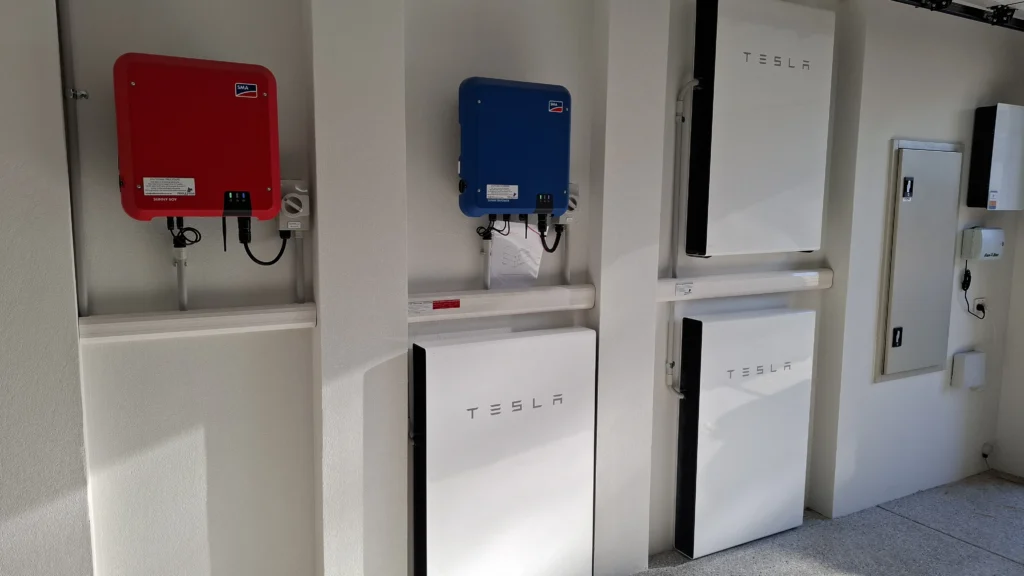
This is the question everyone actually wants answered.
What they can do: during an activation event, discharge a portion of your stored energy to the grid. Events are called when the system needs support, hot afternoons and evenings, mostly, when demand across the SWIS peaks.
What they can’t do: empty your battery, take control of your household loads, access your battery outside the terms of the product, or stop you using your own stored power for your own home.
Why they’d want to: Western Australia has among the highest rooftop solar penetration in the world. On mild sunny days, demand on the SWIS can fall so low it creates stability problems; on hot evenings it spikes. A coordinated pool of household batteries is cheaper and faster than building peaking generation. That’s the whole rationale, and it’s why the state has attached it to the rebate rather than leaving it optional.

Under Synergy’s Battery Rewards program, participants earn a rate per kilowatt-hour exported during activation events. Reported figures put this at $0.70/kWh, substantially above the DEBS export rate you’d receive for ordinary solar export.
Confirm the current rate with Synergy directly before you sign, program terms change, and any installer quoting you a lifetime earnings figure is guessing.
You must remember that: VPP earnings are not the reason to buy a battery. Activation events are infrequent by design, and the energy exported per event is a fraction of your capacity. The revenue is a modest bonus.
The actual financial case for a battery in Perth is self-consumption. Synergy’s residential rate sits around 32c/kWh while daytime DEBS export pays a couple of cents. Every kilowatt-hour you store and use yourself instead of exporting is worth roughly thirty cents. That gap is the investment case, our battery cost guide works through the numbers.
VPP participation is the condition attached to the rebate that improves that case. Treat it that way and the decision gets much simpler.
This is the question we get asked most, and it’s rarely addressed.
VPP participation and blackout backup are separate functions. Whether your battery keeps your house running during an outage depends on how the system is installed, specifically whether it’s wired with a backup circuit and a changeover device, not on whether you’re in a VPP.
Two things worth understanding:
If your battery is configured for backup, that function operates during an outage regardless of your VPP membership. The VPP operator isn’t discharging your battery during a blackout, that’s not what activation events are for.
Get this written into the quote. “Battery backup” on a proposal can mean anything from whole-home to nothing at all.
Scheme documentation requires an ongoing internet connection at the property for VPP testing and operation. This isn’t a setup step, the battery needs to stay connected.
Practical implications people don’t think about:
Ask your installer what happens if the connection drops, how you’d know, how long it can be offline, and what it means for your rebate obligations. That should be answerable in specifics, not reassurances.
Most guides say the battery must be CEC approved. Necessary, but not sufficient.
It generally also needs to be on Synergy’s Supported Solutions List (SSL), which isn’t a list of batteries. It’s organised by inverter manufacturer and lists battery-and-inverter combinations, so eligibility depends on the pairing rather than the battery alone. For this scheme the listing must sit under the DER Storage category. DER Generator doesn’t qualify for VPP.
Several well-regarded brands aren’t on it yet. That reflects which manufacturers have completed Synergy’s process, not the quality of the hardware, and it changes over time. Checking is your installer’s job, not yours, but if you’ve been told a CEC-approved battery isn’t eligible, this is why.
For existing solar owners: because the list is inverter-led, the blocker is sometimes your old inverter rather than the battery.
Nobody raises this, and it’s a reasonable question: if the VPP is discharging your battery during events, does that use up warranty cycles?
Technically yes, VPP activations are cycles like any other. In practice the effect is small, because events are infrequent and partial. But battery warranties are typically written as whichever comes first: a number of years, a throughput figure in MWh, or a cycle count.
The question worth asking your installer is simply: does the manufacturer’s warranty on this specific battery treat VPP participation any differently, and does the throughput allowance leave comfortable headroom for it? For most modern batteries the answer is straightforward. Ask anyway, and get the answer in writing.
A large share of Perth homes have solar from the 2011–2013 boom and are now considering storage. The scheme allows this, but it’s less simple than adding a box to the wall.
Depending on your existing setup, it may require:
Which path suits you depends on your existing inverter, your switchboard, and how old the system is. There’s also a rule interaction worth knowing: from 1 May 2026, new and upgraded systems on the SWIS must meet updated connection requirements, remote disconnection capability via CSIP-AUS, or a 1.5 kW export limit, and adding a battery counts as an upgrade.
Existing systems that aren’t being upgraded don’t need to comply. But the moment you add storage, you’re in scope. Our guide to battery installation in Perth covers what that means in practice.
To access the WA Residential Battery Scheme you generally need to:
Reported rebate amounts are up to $1,300 for Synergy customers and $3,800 for Horizon Power customers, calculated on usable capacity and capped at 10 kWh, so a 13.5 kWh battery receives the same amount as a 10 kWh one.
Separately, no-interest loans of $2,001–$10,000 are available over 3–10 years, means-tested to households under $210,000 combined income. The rebate itself is not means-tested.
The state scheme stacks with the federal battery discount delivered through Small-scale Technology Certificates. The federal rate stepped down from 1 May 2026 and reduces again at intervals, so the total available support is falling over time rather than rising.
Verify all current figures against the WA Government’s applicant page before you commit, amounts and terms have changed more than once since the scheme opened, and any installer quoting you a number should be able to show you where it comes from. Our rebates guide covers the full picture.
Two years is the minimum commitment, not the maximum. After that you can leave the VPP.
Worth understanding before you sign:
Read the agreement’s exit terms specifically. That’s the section to check, and it’s the section most people skip.
Same three questions to every installer quoting you. Compare the answers rather than the prices.
An installer who can answer all three immediately has done this before. One who’s vague on any of them is quoting hardware, not designing a system.
VPP participation is a reasonable trade. You’re getting several thousand dollars in combined rebates in exchange for occasional, partial, paid access to stored energy you’d mostly be holding idle anyway.
But it isn’t free, and the things that genuinely matter aren’t the ones usually discussed. The supported solutions list catches people out. The internet requirement catches people out. Backup being quoted vaguely catches people out.
Buy the battery because self-consumption maths works for your household. Treat the rebate as what makes it work sooner, and VPP participation as the condition attached. If someone is selling you a battery primarily on VPP earnings, be sceptical.
Middle Swan Solar is a family-owned installer based in Middle Swan, working across the Perth metro area. We install and service Enphase, Tesla Powerwall, Sonnen, BYD and Redback battery systems, and we’re a Platinum Enphase Installer in WA.
For scheme installs we work with hardware listed under DER Storage on Synergy’s SSL, including Tesla Powerwall and Redback. Not everything we install is on that list today, and we’ll tell you which is which rather than quoting you something ineligible.
We’ll confirm SSL eligibility for the exact model quoted, specify which circuits are backed up, and run the self-consumption maths on your actual bills.
