- Office 9, 8-12 Stafford St, Midland WA 6056
- Mon-Fri 9:30AM - 4:30PM
Perth enjoys strong sunshine year-round, but a solar battery is only worth considering if it works for your home and your energy usage. In 2026, Federal support and the WA battery scheme can reduce upfront installation costs by thousands. Even so, you still need to work out whether a battery is the right fit for your household, what size system you need, how export rules affect savings, and what extra costs may come with the installation.
This guide covers price ranges, rebates, sizing and smart buying steps for Perth homes today. Ready to compare brands? See the solar batteries in Perth we install.
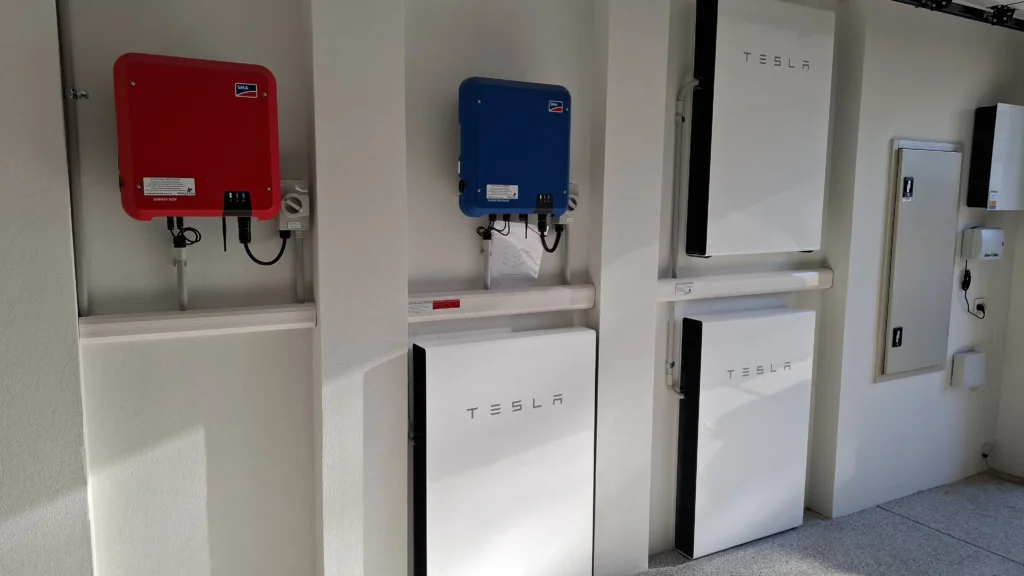
Battery pricing changed after the Australian Government launched the Cheaper Home Batteries Program on 1 July 2025. The program takes a discount off the price of eligible batteries installed with new or existing rooftop solar. The discount depends on the battery’s usable capacity and steps down every six months, so your quote shows the exact amount on the day you buy. According to the Clean Energy Regulator, eligible batteries must have a nominal capacity of 5 to 100 kWh.
On top of that, the WA Residential Battery Scheme gives Synergy customers a rebate of up to $1,300 and Horizon Power customers up to $3,800 on an eligible battery. Eligible households can also apply for a no-interest loan of up to $10,000. See our solar rebates guide for current amounts and eligibility.

The battery budget for most Perth households ranges from $8,000 to $15,000, with a federal rebate that depends on size, brand, inverter requirements, and site complexity. Local Perth guides and national price indexes both fall within that zone.
Solar Choice’s February 2026 price index gives average installed prices by usable size. A battery-only setup averaged $5,425 for 5 kWh, $8,650 for 10 kWh, and $14,700 for 20 kWh. If the home also needed an added inverter, those averages rose to $7,325, $10,350, and $16,900.
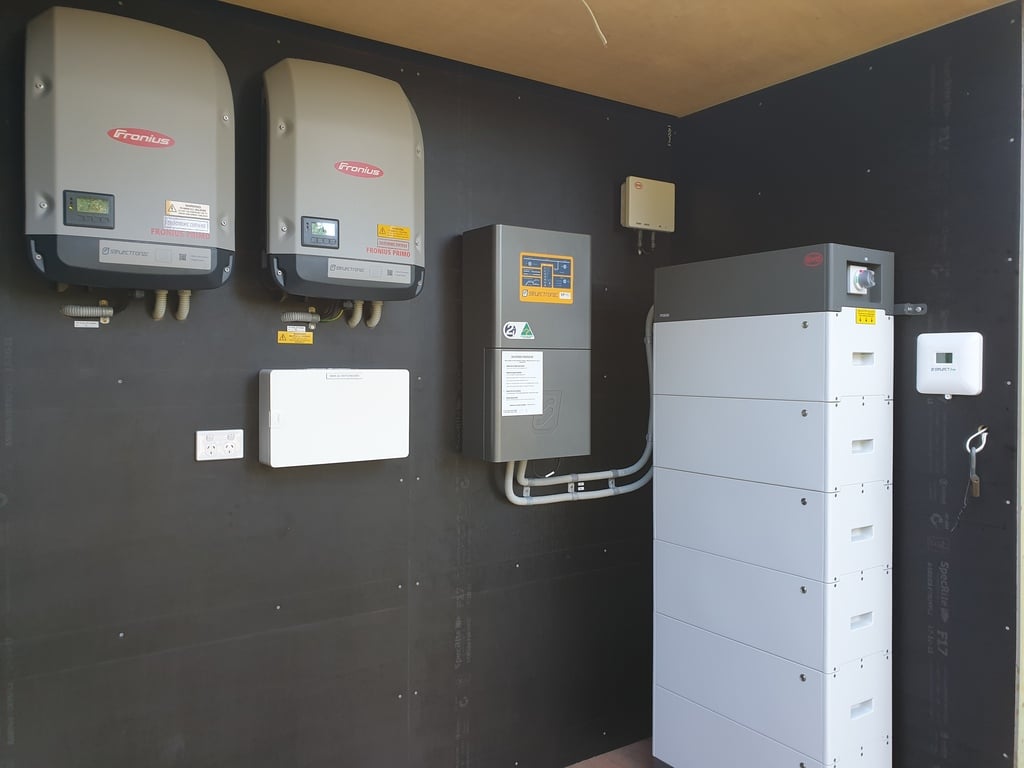
Many Perth homes already have solar, and not all of them have hardware ready to be battery-powered. The quote can be costly if your system requires a hybrid inverter, switchboard upgrades, new cabling, additional protection equipment, or additional labor. That is why two homes with the same battery size can get different prices.
Perth has a local pricing story that changes the value equation. Under the WA Distributed Energy Buyback Scheme, Synergy customers earn 10 cents per kWh for electricity exported between 3pm and 9pm, but only 2 cents per kWh at other times. Meanwhile, Synergy’s Home Plan (A1) tariff charges over 30 cents per kWh for electricity you buy from the grid, and the price is reviewed each July.
That means solar you export at midday earns far less than the evening power it could replace. When you store daytime solar and use it at night, you swap electricity that costs you over 30 cents a unit for energy that would have earned you as little as 2 cents. Shifting 10 kWh a day this way can be worth around $3 a day, before battery losses and depreciation.
Capacity is the clearest cost driver. Solar Choice demonstrates that battery-only pricing decreases from approximately $1,085 per kWh to approximately $735 per kWh at 5 and 20 kWh, respectively, in February 2026. Large batteries can be better value per kWh. when your solar system can fill its batteries and your household can consume them every day.
Adding a battery to an older solar setup often costs more than installing solar and a battery together. Some homes need a new inverter, electrical changes, or both. The Clean Energy Regulator also says upgraded systems need approved components and a current compliant design and installation.
Some batteries are built mainly to save on bills. Others are designed for blackout support, essential load backup, or broader home energy control. Gateway devices, blackout circuits, monitoring apps, and smart control features all influence the final quote. CHOICE recommends comparing system performance, savings potential, and blackout behavior rather than chasing the cheapest sticker price.
From 1 May 2026, new and upgraded solar panels and battery systems in the SWIS must meet updated WA rules. These rules include remote disconnection and re connection capability, or export limiting to 1.5 kW in some situations. They can affect how a system is designed, commissioned, and connected.
Most homes do not need the biggest battery on the market. Start with how much power you use overnight. A battery within that range is often a sensible size for your home if it normally consumes approximately 8 to 12 kWh of electricity between sunset and sunrise.
You may go smaller if your goal is basic bill reduction. You may go larger if you run heavy cooling loads at night, want stronger blackout support, own an EV, or plan to electrify more of the home later.
This is where Middle Swan Solar adds value, because a good installer should look at your usage pattern instead of selling a bigger box.

Such checks are in line with the existing rules on federal eligibility, WA scheme instructions, and consumer purchasing recommendations.

The optimal battery suits your nighttime use, solar energy, and the future. The correct system is able to reduce bills in Perth, save more of your own electricity, and lessen grid dependence.
The monthly averages of Solar Choice (February 2026) estimate that a battery of 10 kWh will cost around $8,650 installed into a battery-ready home, and around $10,350 installed when an inverter has to be added.