- Office 9, 8-12 Stafford St, Midland WA 6056
- Mon-Fri 9:30AM - 4:30PM
Buying a battery is a big decision, and size is where most people get stuck. Go too small and you’ll still buy power from the grid every night. Go too big and you pay for storage you never use.
The right battery is one that covers your evening and overnight power use. In Perth, rebates also make 10 to 14 kWh of usable storage the best-value range. Here’s how to work out your own number, and how WA’s rebates fit in.
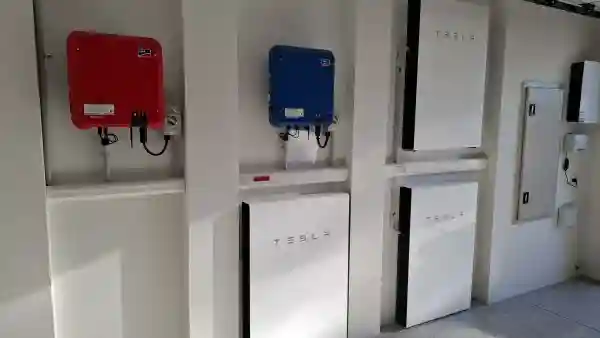
A battery stores spare solar from the day and gives it back after the sun goes down. So the number that matters most is how much power you use from late afternoon until morning.
You can find this on your power bill or in your electricity account online. Look for your usage by time of day. Only see a daily total? Ask your installer to check your usage data. They can see when your home uses power.
Your evening and overnight use | Usable battery size to cover it | Example setups |
About 5 kWh | 5 kWh | One Enphase IQ Battery 5P (5 kWh) |
About 10 kWh | 10 kWh | Two Enphase IQ Battery 5P units |
About 13 to 14 kWh | 13 to 14 kWh | One Tesla Powerwall 3 (13.5 kWh) |
About 15 kWh or more | 15 kWh or more | Three IQ Battery 5P units, or a Powerwall 3 with an expansion |
Then match your battery to that number:Battery sizes are from Enphase and Tesla’s Powerwall 3 datasheet.
Always compare batteries by usable capacity. That’s the amount of stored energy you can actually use. Some brands quote a bigger total figure that includes energy the battery keeps in reserve.
WA’s rebate is also worked out on usable capacity, so it’s the only number that matters when you compare quotes.
A battery is only useful if your panels can charge it. Your solar system has to run your home during the day and fill the battery at the same time.
If your system is small or old, a big battery may never charge fully, especially in winter. Our guide to what size solar system you need in Perth covers the panel side of the sum. Already have solar? See adding a battery to existing solar.
Scheme | How it works | What it means for size |
WA Residential Battery Scheme (Synergy customers) | $130 per kWh of usable capacity, up to $1,300 | Needs at least 5 kWh. Pays on up to 10 kWh, so anything above 10 kWh gets the same $1,300 |
WA Residential Battery Scheme (Horizon Power customers) | $380 per kWh, up to $3,800 | Same 5 kWh minimum and 10 kWh limit |
Federal Cheaper Home Batteries Program (from 1 May 2026) | Upfront discount through certificates | Full discount on the first 14 kWh. 60% for each kWh from 14 to 28 kWh, then 15% from 28 to 50 kWh |
Sources: WA Government and the Clean Energy Regulator.
There are a couple of catches. To get the WA rebate, you must join a virtual power plant (VPP) and have an ongoing internet connection. Our guide to virtual power plants in WA explains how they work.
So what does this mean in practice? A battery of about 10 to 14 kWh gets the most out of both schemes for a typical home. Going much past 14 kWh still earns a discount, but a smaller one for each extra kWh. For more detail, read our Perth solar rebates guide.
WA’s Distributed Energy Buyback Scheme pays more for solar sent to the grid between 3pm and 9pm. That’s according to the WA Government, and rates are reviewed each year.
That’s also when most families start cooking, running the air con and watching TV. A well-sized battery lets you use your own stored solar through that evening peak. For the latest rules, see our guide to Perth solar battery rules.

For Enphase-specific advice, see what size Enphase battery Perth homes need. For prices by size, see our solar battery cost guide for Perth.