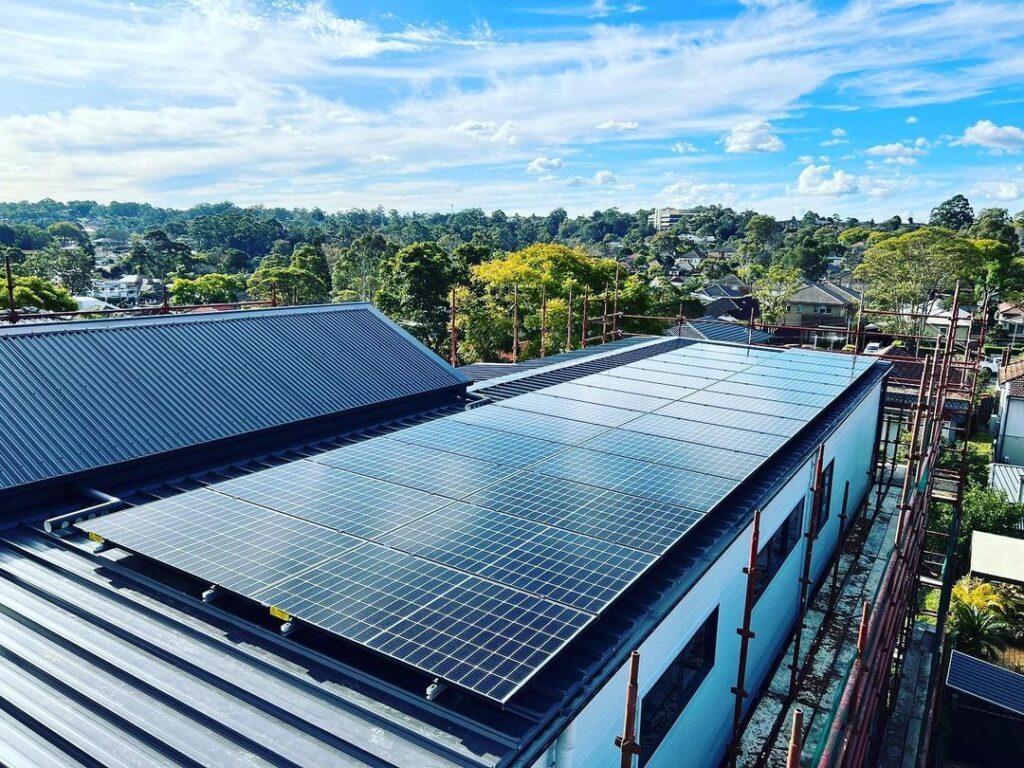
In Perth, the right system size is the one that produces most of its power while you are using it, with headroom for the loads you are about to add. Your annual electricity usage is where sizing starts, not where it ends, surplus exports earn 2c per kWh outside 3pm to 9pm, and only on the first 50 units a day.
That single fact changes the answer. In a state with a generous feed-in tariff, you size to your total bill and sell the rest. In Perth you size to your own consumption, because the export income is small and capped. Below is what each size actually produces here, what it needs from your roof, and how to work out which one fits your house.
If you want the wider picture first, start with our guide to solar panels in Perth.

These figures assume a well-oriented Perth metro roof with little shading, averaged across a full year. Output is given as a range because orientation, pitch, shading and panel choice move it by 10 to 20 per cent either way. A north-facing roof at the top of the range will beat an east-west split at the bottom of it.
System | Panels | Roof space | Typical output per day | Typical output per year |
3 kW | 7 | ~14 m² | 12–14 kWh | 4,400–4,900 kWh |
5 kW | 12 | ~24 m² | 20–23 kWh | 7,300–8,200 kWh |
6 kW | 14 | ~28 m² | 24–27 kWh | 8,800–9,900 kWh |
6.6 kW | 15 | ~30 m² | 26–30 kWh | 9,600–10,800 kWh |
8 kW | 18 | ~36 m² | 32–36 kWh | 11,700–13,100 kWh |
10 kW | 23 | ~46 m² | 40–45 kWh | 14,600–16,400 kWh |
10.6 kW | 24 | ~48 m² | 42–48 kWh | 15,500–17,400 kWh |
13.2 kW | 30 | ~60 m² | 53–59 kWh | 19,300–21,700 kWh |
Panel counts assume 440 W modules, the current mainstream size. Roof space allows about 2 m² per panel including framing and clearance. Figures checked 30 September 2026.
Because each one is a standard inverter size multiplied by 1.33. The Clean Energy Council’s design guidelines let the panel array exceed the inverter’s rated output by up to one third and still qualify for federal STCs. Installers size right up to that ceiling, because the extra panels are cheap and they lift output in the early morning and late afternoon when the sun is weak.
Run the arithmetic and the whole set of odd numbers falls out:
Inverter | × 1.33 | Array size sold as | What you search for |
5 kW | 6.65 kW | 6.6 kW | “6.6kw solar system perth” |
6 kW | 7.98 kW | 8 kW | “8kw solar system perth” |
8 kW | 10.64 kW | 10.6 kW | “10.6kw solar system perth” |
10 kW | 13.3 kW | 13.2 kW | “13.2kw solar system perth” |
20 kW | 26.6 kW | 26.6 kW | “26.6kw solar system perth” |
Why this matters to you, not just to installers?
The ceiling is a hard line. Go one watt over 133 per cent of inverter capacity and the STC claim can be refused, which is several thousand dollars on a typical system.
So if a quote shows an array and an inverter that do not sit inside that ratio, ask about it before you sign. It is either a mistake or there is a reason, and either way you want to know which.
Oversizing is normal, legitimate and good for you. A 5 kW inverter paired with 6.6 kW of panels spends more of the day near its rated output, which is where an inverter is most efficient. What it does not do is let you export more, that is a separate limit, and it is set by your network connection rather than by your hardware.
You need two numbers from your electricity bill: your average daily usage in kWh, and how much of it happens between roughly 8am and 4pm. The first is printed on the bill. The second usually is not, which is why most sizing conversations skip it, and why most systems end up bigger than they need to be.
Three ways to get the second number, in order of accuracy:
Then size so that the array covers your daytime load comfortably, with surplus rather than deficit. Surplus is cheap to add and worth a little; deficit means buying power at retail rates for the life of the system.
Because of how the Distributed Energy Buyback Scheme pays. Under Synergy’s DEBS, electricity you export earns 10c per kWh between 3pm and 9pm, and 2c per kWh at every other time. Those rates have applied since 1 July 2024, and they are paid on the first 50 units exported daily.
Read that against what you pay to import and the logic becomes obvious. Most of a solar system’s output arrives well before 3pm. Exported at 2c, a kilowatt-hour is worth a small fraction of the same kilowatt-hour used in your own house. Beyond 50 units a day, the export is not paid for at all.
What happens to a kilowatt-hour | What it is worth |
Used in your home as it is generated | The full retail rate you would otherwise have paid |
Exported between 3pm and 9pm | 10c per kWh |
Exported at any other time | 2c per kWh |
Exported beyond 50 units in a day | Nothing |
DEBS rates per Synergy, effective 1 July 2024, checked 30 September 2026.
This is also the argument for a battery rather than a bigger array. Once your daytime load is covered, the next useful thing you can do with midday surplus is store it for the evening, not export it at 2c. Our page on solar batteries covers what that costs and what it saves.
From 1 May 2026, homes and small businesses on a standard connection in the main grid can have up to 30 kVA of aggregate inverter capacity, subject to the applicable connection requirements. New and upgraded systems need to support the required remote-management capability, and systems that do not may operate under an export limit.
Two things worth being precise about, because they are widely misreported:
We have written the detail out separately, including what 30 kVA actually means in practice and how flexible exports and CSIP-AUS work: Perth solar and battery rules for 2026.
The practical effect on sizing is that the ceiling is now high enough that most residential decisions are limited by roof space, budget and self-consumption rather than by the connection rules. That is a real change from a few years ago.
When the loads you are about to add are bigger than the ones you have now. Sizing to today’s bill is the most common way people end up wishing they had gone larger, because a solar array is the cheapest it will ever be on the day the scaffolding is already up.
Going bigger is usually the right call if any of these are on the horizon:
The cost of adding panels at installation is a fraction of the cost of coming back later, because the second visit repeats the scaffolding, the labour, the inspection and often the inverter.
When the roof, the budget or the usage pattern genuinely will not support more. Bigger is not automatically better, and we would rather size honestly than sell you capacity you cannot use.
Factor | What it does to your sizing |
Orientation | North is best in Perth. West-facing panels produce less overall but more in the late afternoon, which lines up with both the 3pm–9pm export window and peak household demand. An east-west split flattens the curve, which often suits self-consumption better than a pure north array |
Pitch | Perth’s latitude suits roof pitches in the usual 20–30 degree range well. Very flat roofs need tilt frames, which cost more and take more space per panel |
Usable area | Not the same as roof area. Fire clearances, plumbing vents, aerials, skylights and air conditioning units all remove usable space. A 60 m² roof rarely fits 60 m² of panels |
Shading | One shaded panel can drag down a whole string on a string inverter, so a shaded roof often changes the hardware choice before it changes the size |
Shading is the factor most worth resolving before you settle on a size, because it changes what the same number of panels will actually deliver. It is also where micro-inverters change the maths: each panel operates independently, so one shaded module does not drag down the rest of the array.
It changes what inverter you can fit, which in turn changes the practical array size. Three-phase supply generally allows more inverter capacity and spreads it across phases, which makes larger systems and larger batteries simpler to connect.
Most Perth homes are single-phase. That is not a barrier to a well-sized system, but it is a reason to have the connection checked before a size is promised, rather than after. If a quote offers you a large system without anyone having confirmed your supply arrangement, that is worth a question. Our solar inverters page explains the differences between inverter types.

Not directly, the rebate is calculated on battery capacity, not panel capacity. But array size determines whether you have enough surplus to make a battery worth having, so the two decisions belong in the same conversation.
How the WA Residential Battery Scheme calculates it, as at 30 September 2026:
Rule | Detail |
Minimum to qualify | At least 5.0 kWh of usable capacity |
Rate — Synergy customers | $130 per kWh of usable capacity, to a maximum of $1,300 |
Rate — Horizon Power customers | $380 per kWh of usable capacity, to a maximum of $3,800 |
Calculated up to | 10.0 kWh of usable capacity |
Batteries larger than 10 kWh | Still eligible. They receive the rebate up to the cap — so a 13.5 kWh battery attracts the full capped amount, not a reduced one |
Figures per Energy Policy WA, checked 30 September 2026. Scheme conditions also cover approved products, accredited installation, timing and virtual power plant participation.
Price depends on the panels, the inverter, the roof and the complexity of the install far more than on the kilowatt figure, which is why two quotes for the same size can look nothing alike. We quote what we actually charge rather than a market average, because a market average for Perth includes work we would not put our name to.
Middle Swan Solar installations start from $8,000, using premium panels, inverters and installation. Your final price depends on the system size, equipment and your roof.
For a fuller breakdown of what drives the number and how to compare quotes properly, see how much solar panels cost in Perth.
We are a family-owned solar installer based in Middle Swan, working across the Perth metropolitan area. Sizing is the part of a solar quote where the money is either well spent or quietly wasted, so we would rather look at your actual usage than hand you a number over the phone.
Send us a recent bill and we will come back with a size, an output estimate for your roof specifically, and the reasoning behind both. Get in touch.