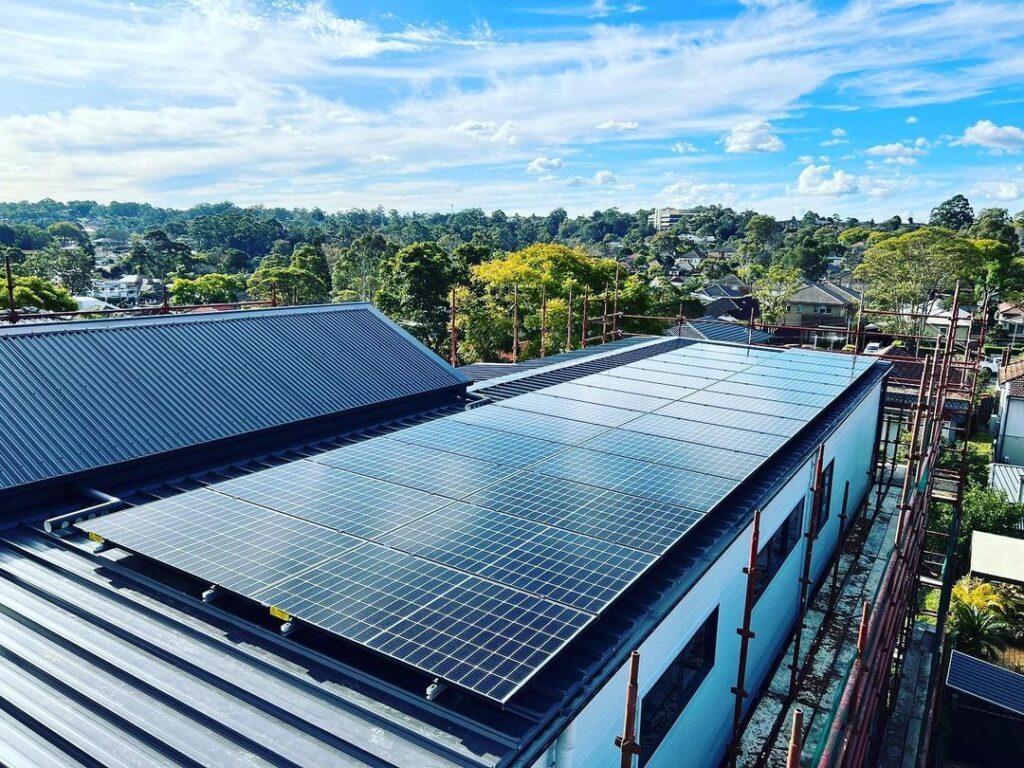
By 2026, Perth will remain one of the most convenient locations in Australia to implement solar. We see it every year at Middle Swan Solar, in homes here. If you have good sunlight and use in the day, you can save money quickly. The snare is easy. This calls for the correct sizing, installer, and approach depending on how your house will be used.
Yes, solar energy installation in Perth will pay off in 2026. Perth experiences high levels of sunshine. Utility power is expensive. The price of the equipment is reasonable. Perth Airport enjoys up to 8.8 hours of sunlight per day. The price of electricity according to the A1 tariff set by Synergy is 32.3719 cents per kWh.

Solar is best used to offset grid purchases. That trade is still good in Perth. Solar Choice estimates that the cost of a typical 6.6 kW solar system for Perth is $4,710 after rebates. It further indicates that even today, many homes solar systems are still paid off within 3 to 4 years.
Perth’s climate helps. The figures from Solar Choice indicate that Perth gets between 5.3 and 5.8 peak sun hours daily. This implies that a 10 kW array would produce between 40 and 44 kWh per day. However, production depends on shading, tilt angle, and orientation of the solar panels. But Perth’s weather provides a solid foundation.
The question that many people continue to ask is the wrong one. They enquire about what the grid will pay for exports. The more appropriate question in Perth would be the amount of solar that you can utilise yourself.
The DEBS for Synergy is 10 cents per kWh between 3 pm and 9 pm. It’s 2 cents per kWh before 3 pm or after 9 pm. That’s compared to 32.3719 cents per kWh for the A1 tariff. Most units exported are of lower value than a unit used for self-use.
This is why it is important to use power during the day. Move the pool pump to daytime. Cool the house before the evening peak. Solar savings can be raised using small timing variations without additional hardware. In many cases though, this isn’t possible, and that’s when it’s best to explore using a solar battery to keep your hard earned solar power.
Big isn’t necessarily better. Not too small is not great either. The home size of 6.6 kW is the most widespread in Perth. According to Hipages, an average Perth household consumes 15-20 kWh/day. Solar Choice claims that the most popular systems in Perth are 6.6 kW systems.
An easy guide would be of the form:
The federal Small-scale Renewable Energy Scheme still cuts the up-front price with STCs. The Clean Energy Regulator reports STCs can cut the cost of the system when they are given to a registered agent. SolarQuotes calculates that in 2016, the rebate reduced the purchase price of a 10 kW system by about $2,500. That is helpful. Rebate size is not the only determinant of purchase.
A low price might become costly in the future. SolarQuotes lists installer, inverter, panel brand, and complexity as factors. Poor design can erase the savings that you were purchasing.
According to Western Power, the new technical requirements will be effective as of 1 May 2026. The new rules will increase the permissible size of a single-phase inverter by 10 kVA, as opposed to 5 kVA in the current rules. Conditions on the site, export conditions, and safety regulations continue to exist. But there will be some sites that can be bigger.
The WA Residential Battery Scheme is a $1,300 Synergy rebate or a $3,800 Horizon Power rebate. The WA Government says the support is almost as much as $5,000-$7,500 with the federal government’s help. That rebate is not available on solar-only systems. It is not on panels, but it is on batteries.
Ask these five questions before you say yes:

In Perth, solar is still best when you have clear skies, daytime demand, and a good-sized system. Don’t go for the lowest price. Get the right system.
Are you interested in seeing whether solar would be a good investment for you in 2026? Contact Middle Swan Solar to get professional advice based on your consumption needs.