
Perth homes make plenty of solar power, but plenty of that value still slips away before you’re home from work. That is why more owners are asking about a solar battery to store power.
At Middle Swan Solar, the smart question is not “Should I buy the biggest battery?” It is “Will this battery fit my usage, tariff, roof, and switchboard?” That is where the savings are won or lost. Get that right, and storage can feel practical, not promotional.
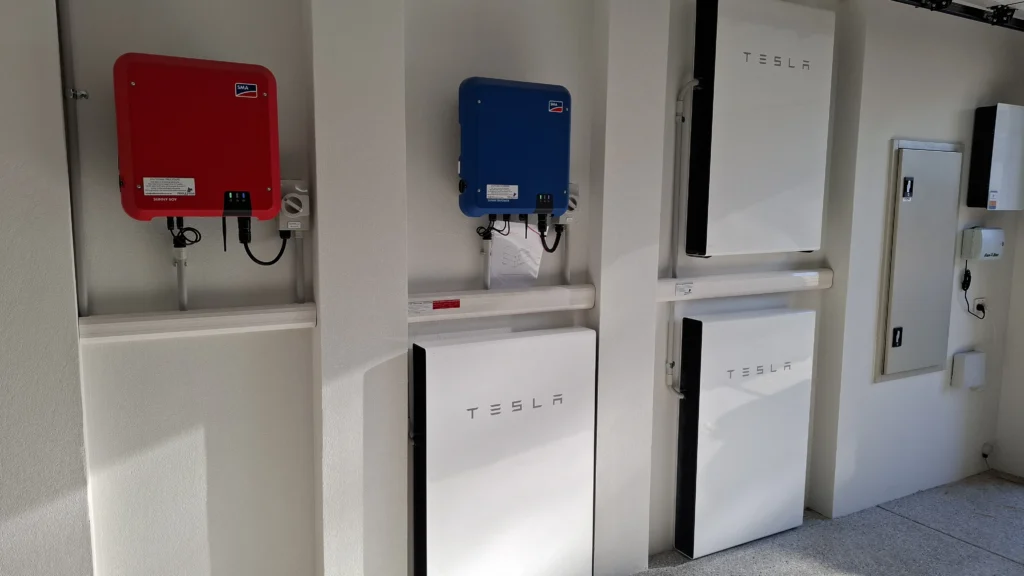
This is not just a trend story. It is a tariff and timing story. Western Australia’s Distributed Energy Buyback Scheme pays 10 cents per kilowatt-hour from 3 pm to 9 pm, but only 2 cents at other times. That means cheap daytime exports often matter less than using your own stored power later. The policy picture changed, too. The federal Cheaper Home Batteries Program offers around 30% off eligible systems connected to new or existing solar. In WA, the Residential Battery Scheme can add a rebate and a no-interest loan, with up to $1,300 for Synergy customers and $3,800 for Horizon Power customers.
There is real market momentum behind that. The Clean Energy Regulator says more than 193,000 valid batteries were installed in 2025, delivering 4.6 GWh of capacity. By 20 March 2026, total installations since 1 July 2025 had passed 266,959 batteries nationwide.
A battery usually works best when your home has three things:
That is a practical inference from how WA export rates and battery incentives now work.
A good battery quote starts with your load profile, not a brand pitch. Your installer should review your solar size, inverter type, switchboard condition, export history, and evening demand. If you already have solar, you may not need to replace everything.
The federal program allows batteries to be installed with existing solar, as long as the system meets safety and eligibility rules.
The solar inverter question matters. Some homes need a hybrid inverter. Others can use an AC-coupled battery with its own inverter. What matters most is compatibility and a compliant design.
Under the federal program, the inverter must be on the Clean Energy Council-approved list, and the installation must be done by, or under the on-site supervision of, an accredited battery installer.
Placement is not a small detail. It is a safety and compliance issue. Western Power says battery standards require at least 600 mm on either side and 900 mm above the battery from windows, doors, and appliances, including hot water systems and air conditioners. Batteries can be wall-mounted or floor-standing.
That is why the “easy spot” is not always the legal spot. A battery cannot simply go wherever there is empty wall space. The best location is usually cool, protected, easy to service, and close enough to keep cable runs sensible. Shaded garage walls often work well, but each property is different.
According to SolarQuotes, installing a battery with AC coupling can typically be done within half a day, as long as it’s a straightforward retrofit. However, if the install is going to be more complex, such as providing additional components for a system upgrade or rewiring, expect it to take at least 1-2 days to complete the project.
On the day of installation, we mount the battery, connect it to the inverter and switchboard, test it, and then commission it. We also set up monitoring so you can keep track of how your battery’s charging and discharging, as well as how much energy you are importing and exporting. The battery is mounted, wired to the inverter, and the switchboard is tested and commissioned on the day.
You can track charging, discharging, imports, and exports with the monitoring setup. You should also receive compliance paperwork, warranty documents, and a clear handover on how backup works, if backup is included.
Ask these before you approve any quote:
These are the things that help me figure out what is a deal, not just what is cheap.

Battery systems may be improving fast, but the rules still matter just as much. A battery is not something you want installed carelessly.
In Australia, installers must follow strict standards, and the Clean Energy Regulator can take action if the work is unsafe or non-compliant. In Western Australia, battery installations may also be checked by the government, especially when a state rebate or support scheme is involved. That is why choosing a qualified installer matters. You are not just buying equipment. You are trusting someone to install it safely, legally, and properly.
Want a battery system installed the right way from day one? Talk to Middle Swan Solar for clear advice, compliant installation, and a setup that fits your home.

The cost of solar battery installation in Perth depends on the battery size, brand, inverter setup, backup features, and whether your switchboard needs upgrades. A simple battery add-on usually costs less than a larger system with blackout backup and extra electrical work. Rebates and federal battery support can also lower the upfront price. The best way to understand your true cost is to get a quote based on your home’s energy use, not just a generic price range.
