Perth enjoys strong sunshine year-round, but a solar battery is only worth considering if it works for your home and your energy usage. In 2026, Federal support and the WA battery scheme can reduce upfront installation costs by thousands. Even so, you still need to work out whether a battery is the right fit for your household, what size system you need, how export rules affect savings, and what extra costs may come with the installation.
This guide covers price ranges, rebates, sizing, and smart buying steps for Perth homes today.
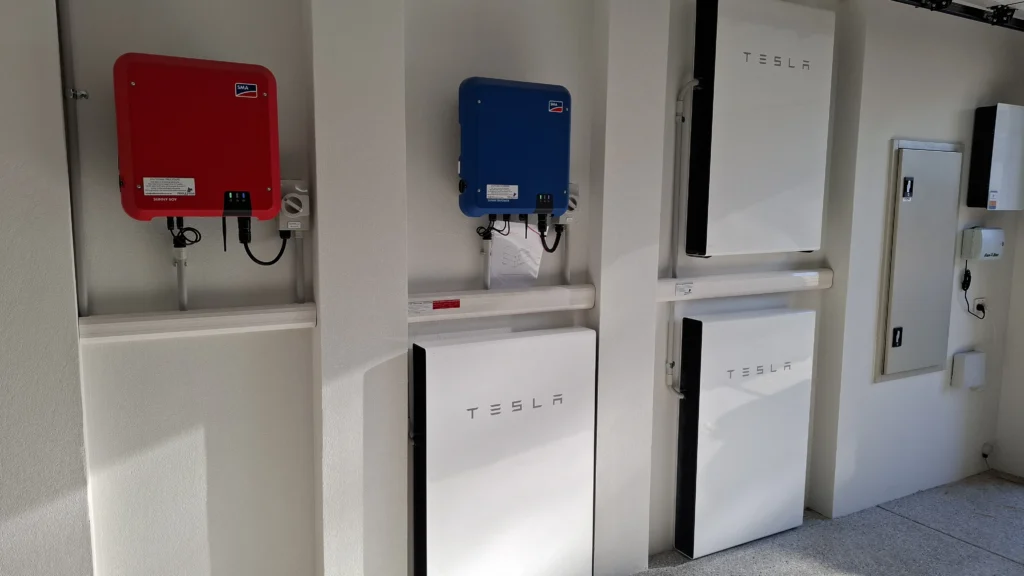
Battery pricing changed after the Australian Government launched the Cheaper Home Batteries Program on 1 July 2025. The program provides an approximate discount of 30% on qualified small-scale batteries installed in association with newly installed rooftop solar or an existing one. According to the Clean Energy Regulator, the batteries are supposed to be eligible with a nominal capacity of 5-100 kWh.
Additionally, under the WA Residential Battery Scheme, Synergy customers can access a $1,300 rebate, while Horizon Power customers can access a $3,800 rebate. The WA Government says combined support can come close to $5,000 to $7,500 for eligible households.
Clean Energy Council stated that 185,798 household batteries were installed in Australia, 74,582 of which were sold in 2024. It was further discovered that 28.4% of rooftop solar systems have a battery in the second half of 2024.

The battery budget for most Perth households ranges from $8,000 to $15,000, with a federal rebate that depends on size, brand, inverter requirements, and site complexity. Local Perth guides and national price indexes both fall within that zone.
Solar Choice’s February 2026 price index gives average installed prices by usable size. A battery-only setup averaged $5,425 for 5 kWh, $8,650 for 10 kWh, and $14,700 for 20 kWh. If the home also needed an added inverter, those averages rose to $7,325, $10,350, and $16,900.
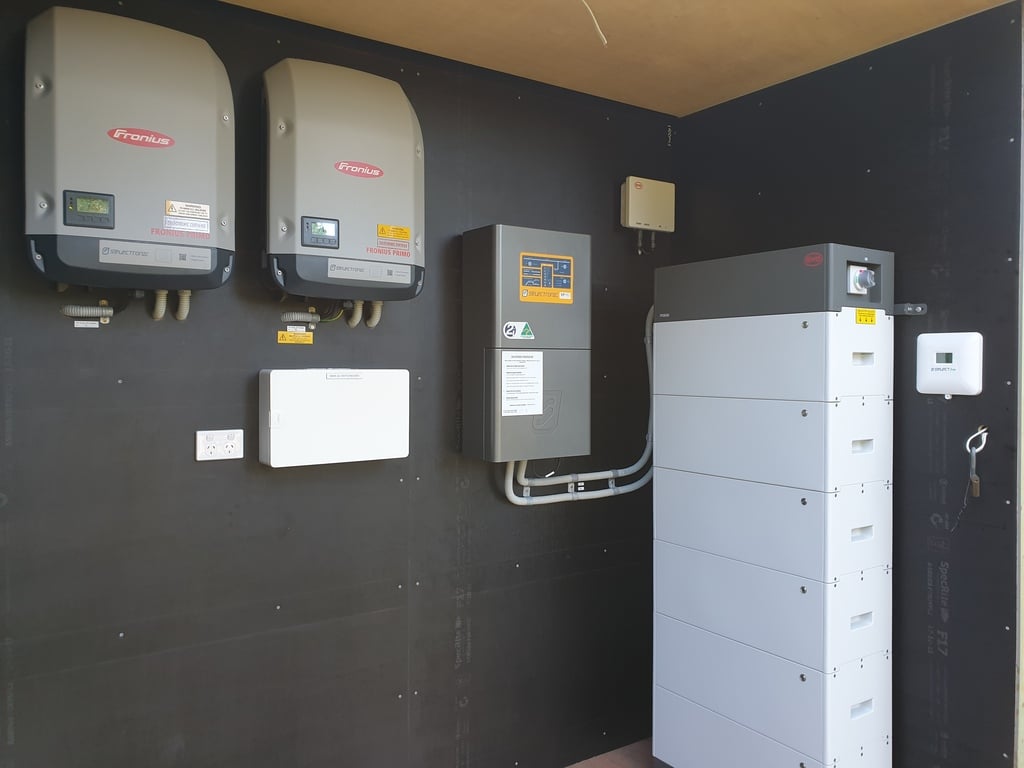
The majority of houses in Perth are solar-powered, and not all of them have hardware ready to be battery-powered. The quote can be costly if your system requires a hybrid inverter, switchboard upgrades, new cabling, additional protection equipment, or additional labour. That is why two homes with the same battery size can get different prices.
Perth has a local pricing story that changes the value equation. Under the WA Distributed Energy Buyback Scheme, Synergy customers earn 10 cents per kWh for electricity exported between 3 pm and 9 pm, but only 2 cents per kWh between 9 pm and 3 pm. Synergy’s Home Plan A1 tariff charges 32.3719 cents per unit for imported electricity.
That implies that exported midday sun can be much cheaper than evaded evening imports. When you save energy in the daytime and spend it at night, you are perhaps substituting electricity, which costs you more than thirty cents a unit, with energy that could have earned you only two cents. This 10 kWh shift can be equivalent to approximately $3.04 in extra value per day, even before battery depreciation.
Capacity is the clearest cost driver. Solar Choice demonstrates that battery-only pricing decreases from approximately $1,085 per kWh to approximately $735 per kWh at 5 and 20 kWh, respectively, in February 2026. Large solar batteries can be prettier on a kWh basis when your solar system can fill its batteries and your household can consume them every day.
Adding a battery to an older solar setup often costs more than installing solar and a battery together. Some homes need a new inverter, electrical changes, or both. The Clean Energy Regulator also says upgraded systems need approved components and a current compliant design and installation.
From 1 May 2026, new and upgraded solar panels and battery systems in the SWIS must meet updated WA rules. These rules include remote disconnection and reconnection capability, or export limiting to 1.5 kW in some situations. They can affect how a system is designed, commissioned, and connected.
Most homes do not need the biggest battery on the market. Your electric consumption is a better place to start with your overnight consumption. A battery within that range is often a sensible size for your home if it normally consumes approximately 8 to 12 kWh of electricity between sunset and sunrise.
You may go smaller if your goal is basic bill reduction. You may go larger if you run heavy cooling loads at night, want stronger blackout support, own an EV, or plan to electrify more of the home later.
This is where Middle Swan Solar adds value, because a good installer should look at your usage pattern instead of selling a bigger box.

Such checks are in line with the existing rules on federal eligibility, WA scheme instructions, and consumer purchasing recommendations.

The optimal battery suits your nighttime use, solar energy, and the future. The correct system is able to reduce bills in Perth, save more of your own electricity, and lessen grid dependence.
The monthly averages of Solar Choice (February 2026) estimate that a battery of 10 kWh will cost around $8,650 installed into a battery-ready home, and around $10,350 installed when an inverter has to be added.