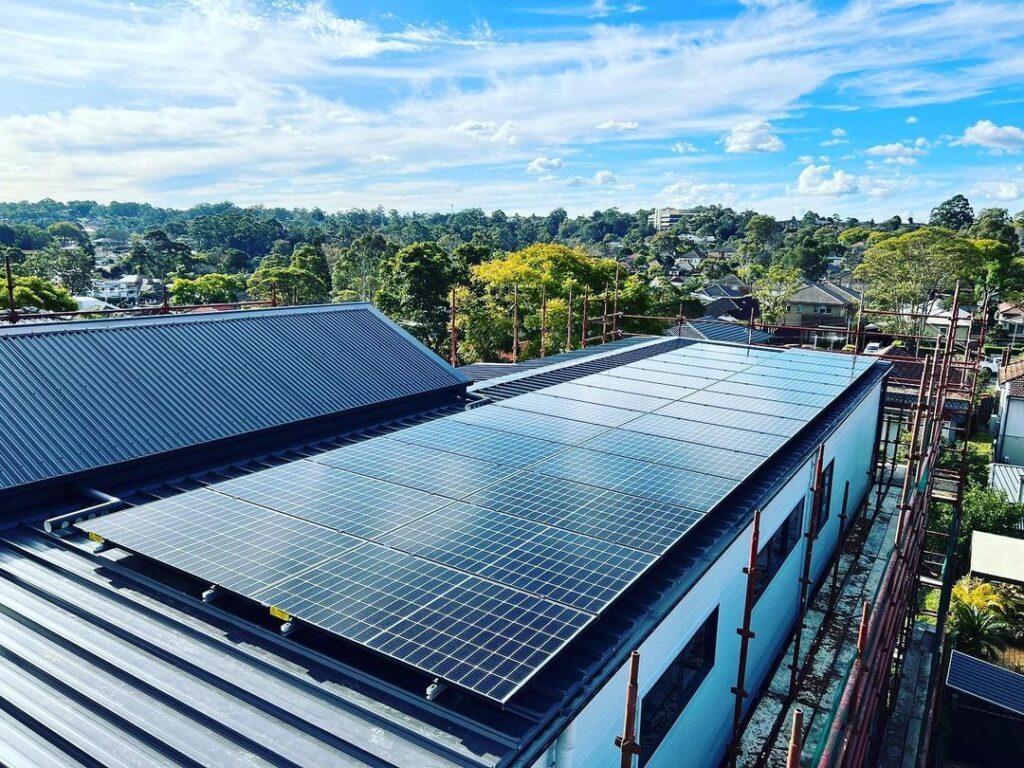
Premium solar only makes sense when it gives you better performance, better durability, and better long-term value. If you are comparing REC solar panels for a Perth home, the real question is not just price. It is whether the system suits your roof, energy use, and future savings goals.
In this guide, you will see how Middle Swan Solar presents REC as a premium solar option, what makes REC PV panels stand out, and when paying more for a REC solar module is actually worth it for your property.

Since 1996, REC has been producing solar panels, and this is important to consider in the long-term support. Even nowadays, a brand can deliver high specs, although you still need to believe that the brand will take care of the product in the future.
The Alpha family leads REC’s current premium residential range. The Alpha Pure-RX reaches up to 470 watts and 22.6% efficiency. The Alpha Pure-R reaches up to 430 watts and 22.3% efficiency. Both are built for strong power density and promise at least 92% of the original power in year twenty-five.
That matters most when roof space is limited. If your roof is small, shaded, or split into awkward sections, higher power per panel helps. You can generate more energy without adding more modules.

REC’s premium residential panels use heterojunction, or HJT, cells. The benefit is better efficiency, better performance in heat, and slower losses over time.
Heat is a real issue in solar. Panels need sunlight, but high panel temperatures reduce output. That is why the temperature coefficient matters. EnergySage ranks the REC Alpha Pure-RX as a strong option for hot climates. Its temperature coefficient is minus 0.24% per degree Celsius.
For WA homes, that is useful. A premium panel should not just test well in a brochure. It should keep producing on long, hot afternoons.
REC also leans hard on durability. The Alpha Pure-R line highlights support bars, extreme load resistance up to 7000 Pa, and construction designed to reduce microcracks. That does not make the panel bulletproof, but it supports the premium positioning.

If you are choosing inside the REC range, start here.
The RX is the roof-space winner. More watts per panel can reduce the total panel count. The Pure-R is the balance pick. It still gives you premium efficiency, a lead-free design, and strong long-term output.
Think of two homes with similar bills. One has a compact roof. The other has a wide, open roof. The smaller roof often benefits more from REC’s higher efficiency. The larger roof may be able to use a lower-cost panel and still reach the same system size.
For many homes, yes. But not for all homes.
REC panels make the most sense when roof space is tight and summer heat matters. They also suit buyers planning to stay in the property for years.
They make less sense when your only goal is the lowest upfront price. In that case, a solid mid-range panel can still deliver good savings. Premium gear is only worth it when the extra efficiency, heat performance, or warranty solves a real problem.
This is where many online reviews miss the mark. They tell you that REC is high quality, but they do not always explain who should pay extra. The better question is not whether REC is good. It is whether REC fits your roof better than a cheaper option.
Australia is already deep into rooftop solar. More than 300,000 rooftop solar systems were installed in 2024, pushing the national total past four million systems. That tells you solar is no longer an early-adopter choice for WA buyers.
The savings are real, too. The Clean Energy Council says rooftop solar users cut bills by more than 6 billion dollars a year in total. It also says the average Australian family can save about 1,500 dollars a year. Savings can rise further when a battery is added.
Rooftop solar delivered 12.8% of Australia’s electricity in the first half of 2025. In the second half of 2025, that rose to 14.2%. The Clean Energy Regulator also says the average small-scale solar system reached 10.4 kilowatts in Q3 2025. Buyers are thinking bigger, and quality choices matter more when systems are larger.
Do not buy on panel specs alone. Check three things first.
First, confirm the exact model is on the Clean Energy Council-approved modules list. Many network providers and rebate pathways, including the Small-scale Renewable Energy Scheme, require approved PV modules.
Second, understand the warranty path. REC offers a 20-year product warranty and a 25-year performance warranty as standard. With REC ProTrust, eligible systems can get 25 years of product, performance, and labor coverage.
Third, ask your installer to explain expected output, not just panel wattage. A well-designed system with the right tilt, orientation, and inverter pairing can outperform a poorly designed premium system.